How to Smooth Forehead Wrinkles Without Botox Naturally
6/26/20262 min read

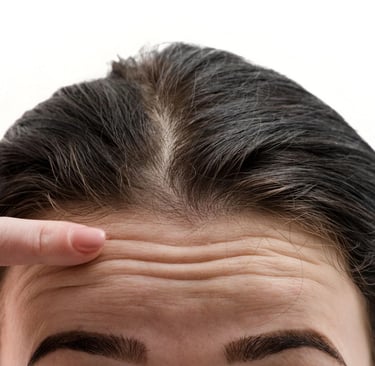
You catch your reflection in a window or the bathroom mirror, and your eyes go straight to your forehead. Those lines seem deeper than they did a few months ago. Maybe you've been using moisturizer every day. Maybe you never skip sunscreen. Yet somehow your forehead still looks older than you expected.
That can feel frustrating because it seems like you've done everything "right."
The truth is that forehead wrinkles rarely develop because of one single cause. Skin changes over time for several reasons, and understanding those changes helps you make better decisions about caring for it.
Every time you raise your eyebrows, concentrate, or react with surprise, the muscles across your forehead contract. Those repeated movements slowly create expression lines. When you're younger, your skin bounces back easily because it contains more collagen and elastin. As the years pass, those structural proteins gradually decline, making the skin less able to spring back after each movement.
Sun exposure also plays a larger role than many people realize. Even with sunscreen, years of ultraviolet light can slowly weaken collagen fibers. Dry skin can make existing lines appear more noticeable, even though dryness itself doesn't cause wrinkles.
This explains why applying a richer moisturizer sometimes makes your forehead look smoother for a few hours. Hydrated skin reflects light better and temporarily plumps the outer layer. It's a helpful step, but it doesn't change the deeper structure of the skin where wrinkles develop.
The same idea applies to facial massage. Gentle massage may improve circulation, reduce temporary puffiness, and help skincare products spread more evenly. Some people also notice that relaxing tense forehead muscles softens the appearance of expression lines for a short time. While these techniques can be worthwhile additions to a routine, current research doesn't show that they erase established wrinkles.
Healthy daily habits still matter. Consistent sun protection, avoiding smoking, getting enough sleep, eating a balanced diet rich in fruits and vegetables, and using products with ingredients supported by research—such as retinoids, vitamin C, peptides, and sunscreen—can all contribute to healthier-looking skin over time. Results usually come gradually rather than overnight.
The biggest shift comes when you stop treating forehead wrinkles as just a surface problem and start thinking about the skin, muscles, and years of cumulative sun exposure working together.
That perspective often changes expectations. Instead of searching for one quick trick, you begin building a routine that supports your skin day after day. Small improvements tend to add up more reliably than dramatic promises.
I remember reaching a point where I realized I wasn't looking for perfect skin. I simply wanted my face to look rested and like myself again. Learning how wrinkles actually develop made it much easier to choose skincare that matched realistic expectations instead of marketing claims.
If you'd like to learn more about the science behind forehead wrinkles, consider watching a short educational video from a qualified dermatologist or skincare professional. Understanding what different treatments can and cannot do can help you decide which approaches fit your goals, budget, and comfort level.
Forehead lines naturally become more noticeable with age, but the earlier you adopt habits that protect your skin, the more opportunity you have to preserve its overall health and appearance.
Better living well
Simple health and wellness content designed to be easy, calming, and beginner-friendly.
Quick links
© 2025. All rights reserved.