Press This Acupressure Point for 3 Minutes to Help Ease Tinnitus Awareness
7/8/20263 min read
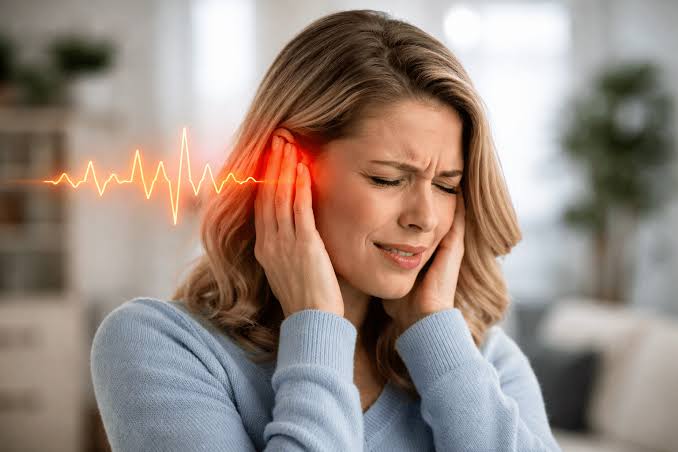

Living with constant ringing can wear you down in ways other people rarely see. Sleep becomes lighter, quiet rooms feel uncomfortable, and even peaceful moments can seem impossible when the sound never seems to stop.
That frustration is real. Many people with tinnitus spend months trying different ideas because they simply want one quiet moment.
If you searched for an acupressure point that might help, it's worth knowing what current evidence actually says. Acupressure is not considered a proven treatment for tinnitus, but some people report that it helps them relax, reduces muscle tension around the jaw and neck, or makes the ringing feel less noticeable for a short time.
One commonly used point is called TE17 (Yifeng). It sits just behind the earlobe, in the small hollow between your jawbone and the bone behind your ear.
To try it:
Place a fingertip gently on the hollow behind the affected ear.
Apply light, comfortable pressure.
Breathe slowly while holding the pressure for about three minutes.
Repeat on the other side if both ears are affected.
The pressure should never be painful. If it hurts, ease off. The goal is gentle stimulation, not force.
Some people also find it helpful to combine this with slow breathing. Stress doesn't cause tinnitus, but it can make the brain pay more attention to the sound. When your body relaxes, your awareness of the ringing may decrease temporarily.
If your tinnitus seems connected with jaw tension, clenching your teeth, or neck stiffness, gentle stretching may also help reduce muscle tension that can sometimes influence how loud tinnitus feels. Good sleep habits, protecting your hearing from loud noise, and managing stress are also practical steps supported by clinical guidance.
The honest limitation is important, though. Acupressure alone is unlikely to address every cause of tinnitus. Ringing in the ears can be associated with hearing loss, prolonged noise exposure, certain medications, jaw disorders, or other medical conditions. If the ringing is new, affects only one ear, comes with dizziness, or is accompanied by sudden hearing changes, it deserves prompt medical evaluation.
For years, I assumed my ears were simply damaged beyond help. After decades working around loud equipment, the ringing gradually became part of every quiet moment. Nights were the hardest. I would wake before dawn with the sound filling the room, even though I knew it was only inside my head.
I tried masking sounds while sleeping. They helped me drift off, but daytime was no different. I spent money on products that promised more than they delivered. A hearing assessment confirmed some hearing loss, yet I still left wondering what I could actually do next.
One comment stayed with me: "You may have to learn to live with it." That felt discouraging.
While reading more about tinnitus research, I discovered that many scientists now describe tinnitus as involving changes in how the brain processes sound, not simply a problem inside the ear itself. That changed how I thought about the condition.
I also came across relaxation techniques, hearing education, and exercises that focused on how the brain responds to tinnitus rather than chasing quick answers.
I don't know whether any single approach will help you. I'm not a doctor, and everyone's tinnitus has different causes. I can only say that understanding the condition made me feel less helpless, and combining several evidence-based strategies gradually helped me notice the ringing less often.
The biggest change wasn't waking up one morning in complete silence. It was realizing one afternoon that I had spent several minutes reading outside without thinking about the ringing at all. That moment gave me hope that my attention didn't always have to belong to tinnitus.
If you've reached the point where you're skeptical, I understand why. Many people with tinnitus have been disappointed by bold claims online.
Learning how the brain processes tinnitus—and which approaches have the strongest scientific support—can help you make better decisions with your healthcare professional. Because tinnitus associated with hearing loss or other underlying conditions can worsen over time for some people, it's worth seeking an evaluation rather than simply trying to endure it.
Better living well
Simple health and wellness content designed to be easy, calming, and beginner-friendly.
Quick links
© 2025. All rights reserved.