Why Your Forehead Lines Look Worse at Night
6/23/20262 min read
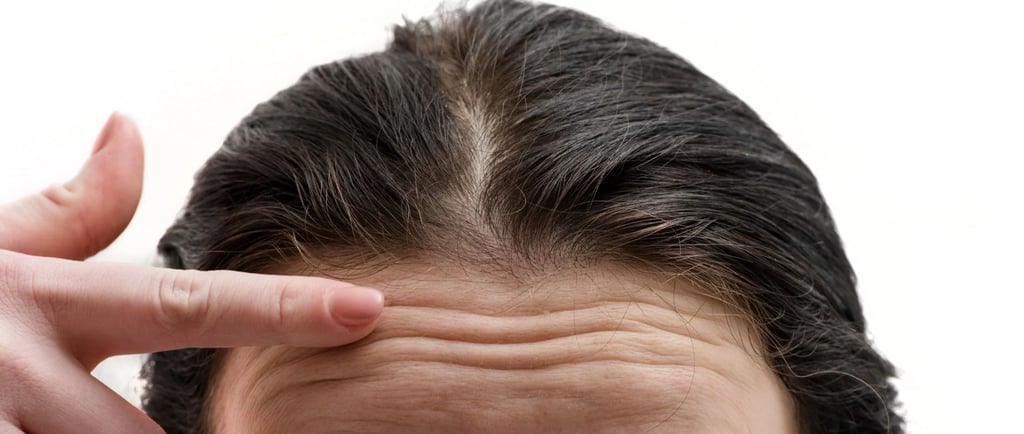
You catch your reflection in the bathroom mirror and do a double take. Those forehead lines seem deeper than they did a year ago.
What's frustrating is that you've been careful. You wear sunscreen. You use moisturizer. You probably have a drawer full of products that promised smoother skin. Yet somehow your forehead still looks older than you feel.
That disconnect can be hard to shake.
One thing most people don't realize is that forehead lines don't suddenly appear. They build slowly from thousands of small movements repeated every day. Every time you raise your eyebrows, squint at a screen, react to a conversation, or concentrate on something difficult, the same skin folds form in the same places.
When you're younger, your skin springs back easily.
As you age, that rebound gets weaker. Collagen production slows. Skin becomes thinner. Moisture levels drop. The folds that once disappeared after a few seconds start lingering longer. Eventually they stay.
That's why so many people feel betrayed by their skincare routine.
A cream can help support hydration. Sunscreen can help protect collagen from UV damage. Both matter. But neither can stop the muscle patterns that create the crease in the first place.
Before bed, try paying attention to something most people never notice.
Place your fingertips gently across your forehead. Raise your eyebrows several times. Feel the muscles contract underneath your skin. Now relax them completely. Many people discover they're holding tension there even when they think they're relaxed.
That constant low-grade tension can make forehead lines appear more pronounced over time.
A woman I spoke with recently described spending years searching for a stronger cream. Then she realized she spent entire workdays with her eyebrows lifted while staring at spreadsheets. Her products weren't necessarily failing. They simply weren't addressing the habit contributing to the problem.
This doesn't mean skincare is useless.
Far from it.
Hydrated skin generally looks smoother. Sun protection remains one of the best ways to slow visible aging. Good habits create a better environment for healthy skin.
But sometimes the missing piece isn't on the surface.
The wrinkle isn't always the problem. Sometimes the pattern creating the wrinkle deserves more attention than the wrinkle itself.
That shift in perspective changes how you look at your forehead.
Instead of asking, "Which product erases this line?" you start asking, "What keeps reinforcing this line every day?"
Those are very different questions.
When you begin noticing facial tension, sleep quality, stress levels, repetitive expressions, and overall skin health together, the picture becomes much clearer. Aging rarely comes from one cause. It usually comes from several small factors working quietly in the background.
And that's actually encouraging.
Because it means your skin isn't necessarily ignoring all your efforts. You may simply be focusing on one piece of a much larger puzzle.
The people who often see the biggest changes aren't usually the ones chasing the newest jar on the shelf. They're the ones who finally understand what their skin has been trying to tell them all along.
After going through this myself, I put together a short free video that goes deeper into exactly this and explains what may be happening beneath the surface of those stubborn forehead lines.
If you're skeptical, that's completely reasonable. Most wrinkle advice sounds identical after a while. In the free video, I walk through the underlying factors that can make forehead lines appear more noticeable and why addressing them earlier matters. Visible signs of aging tend to become harder to reverse once they become deeply established.
Better living well
Simple health and wellness content designed to be easy, calming, and beginner-friendly.
Quick links
© 2025. All rights reserved.